If you’re building new profiles on LinkedIn in 2026, the rules have changed. Especially when it comes to LinkedIn account verification. Not slightly. Fundamentally.
At The Blurb, we’ve been testing new account creation across different use cases, browsers, and behaviours to understand what actually happens today, not what LinkedIn documentation says should happen.
What we’ve seen is a clear shift towards stricter LinkedIn account verification, behavioural monitoring, and trust-based limitations from day one.
Here’s a breakdown of what’s really going on, based on firsthand experience.
New LinkedIn accounts start with hidden limits
One of the most noticeable changes is the introduction of silent restrictions on new accounts.
In one test, a fresh profile was limited to posting just one comment per day.
There was no warning or notification, just a cap that only became obvious through use. As the account grew to around 80 connections and started receiving genuine engagement, that restriction lifted naturally.
No verification prompts.
No appeals.
This suggests LinkedIn is operating a staged trust system where early activity is deliberately throttled.
Accounts that behave consistently and gain organic engagement are gradually given more freedom.
If you’re planning early-stage growth, it’s worth pairing this with a slower content ramp. We’ve explored this further in our guide to building early traction through organic engagement.
LinkedIn account restrictions are not consistent
A key insight from our testing is that not all accounts are treated equally.
While some newly created profiles were restricted within 24 hours, others continued operating without issue under similar conditions. In one case, an older account remained completely unaffected while newer ones faced immediate friction.
This inconsistency points to a more advanced evaluation system that likely considers account history, behavioural patterns, and device or session trust signals.
In simple terms, LinkedIn is not just analysing actions. It’s assessing identity confidence.
Why new LinkedIn accounts get restricted so quickly
In one of our more controlled tests, we created a brand-new profile with minimal setup. No profile photo, no experience, and no detailed information.
We then performed light, normal activity. A few post likes and four to five relevant connection requests.
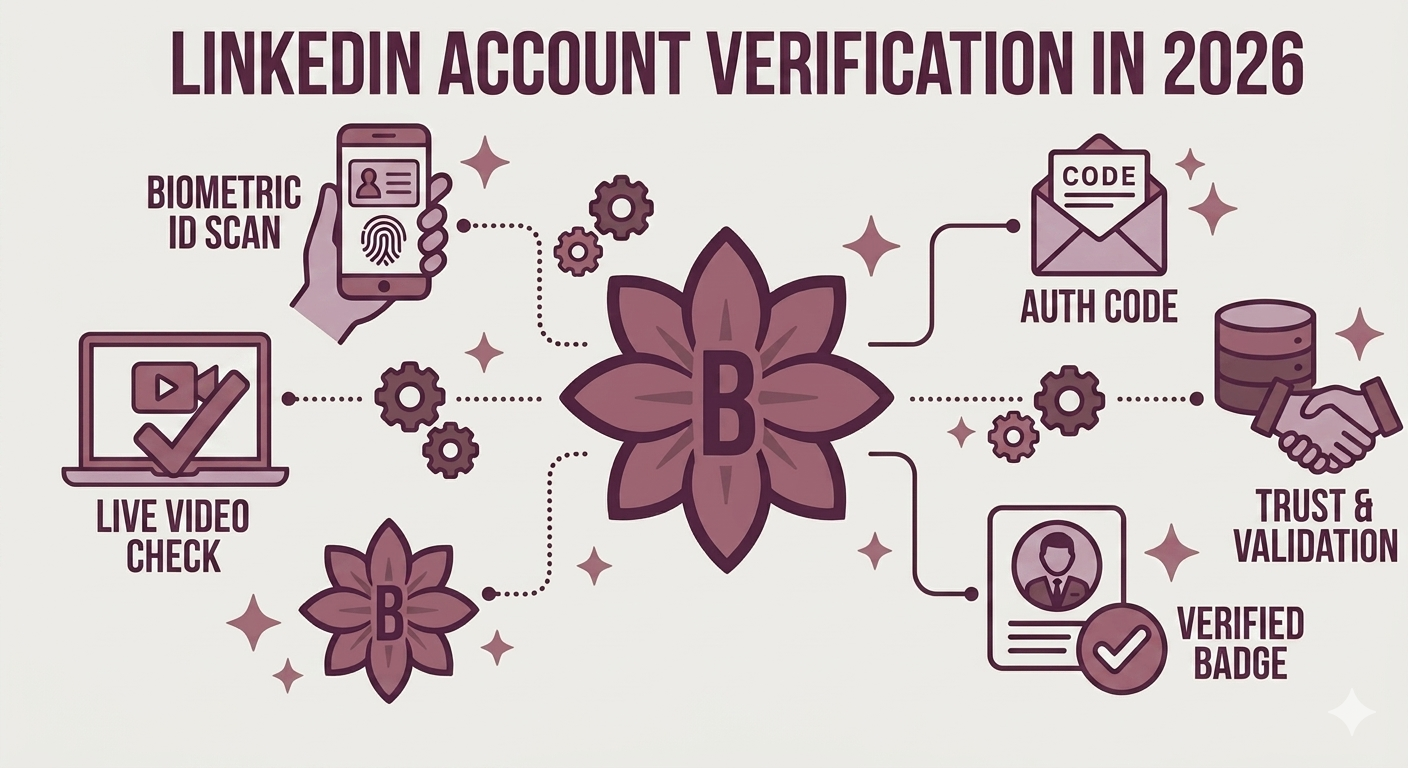
Within 24 hours, the account was restricted and required identity verification via a government-issued ID.
This is a significant change compared to previous years. Historically, users could build out profiles before being scrutinised. Now, engaging too early without credibility signals can trigger immediate restrictions.
From an SEO and growth perspective, this highlights a critical factor. Profile completeness is no longer optional. It’s a trust signal.
If you’re unsure how to optimise profiles properly, our LinkedIn profile optimisation checklist covers exactly what to include from day one.
LinkedIn automation detection is more advanced
Another major development is LinkedIn’s increased sensitivity to automation signals.
During one session switch on an existing account, we were prompted with a warning indicating potential use of automation tools.
This happened despite no new tools being installed and no aggressive activity taking place.
The only change was a shift in behaviour.
This suggests LinkedIn is now monitoring session patterns, background processes, and subtle usage signals more closely than before.
Here’s what Dux-Soup says to do if you get a LinkedIn automation warning.
LinkedIn group posting now triggers verification
We also observed changes within LinkedIn Groups.
After posting in a group and returning a few days later, the account was blocked from posting again without completing verification.
A message indicated a posting limit had been reached and that verification was required to continue.
This is a notable shift.
Group engagement used to be a low-risk activity. Now it appears LinkedIn is using it as another checkpoint to validate account authenticity.
What these LinkedIn changes mean for growth strategies
Taken together, these changes point to a clear direction.
LinkedIn is moving towards a trust-first ecosystem where actions are gated by credibility, behaviour, and identity verification.
For marketers, founders, and content creators, this means rethinking how new accounts are built and scaled.
Fast growth tactics are far less reliable. Instead, success now depends on a more deliberate approach.
Build complete profiles before engaging. Add photos, experience, and skills immediately.
Warm up accounts gradually. Start with low-risk actions like browsing and light engagement before sending connection requests.
Avoid sudden spikes in activity, especially in the first few days.
Be cautious with automation tools and browser extensions, even passive ones.
Here’s how we recommend starting to automate your LinkedIn activity.
‘The Blurb’ take
From our perspective, this is not just a tightening of rules. It’s a shift in philosophy.
LinkedIn is prioritising authenticity at scale. That means fewer shortcuts and more emphasis on real behaviour.
For brands and individuals serious about long-term growth on the platform, this is not necessarily a bad thing. It simply requires a more considered approach.
The opportunity is still there. The process just looks different now.
And if you’re building new LinkedIn accounts in 2026, understanding these changes early can save you time, frustration, and unnecessary restrictions.
If you’re after a bit of reassurance, I’ve worked across 10s of profiles and only ever had two warnings in 5 years. One was on my account, which barely used before I started testing out Dux-Soup, the other was another free account, which also wasn’t being used much prior to automation.
For all others – genuine accounts, with regular activity, automation has saved us hours and generated a steady flow of leads.